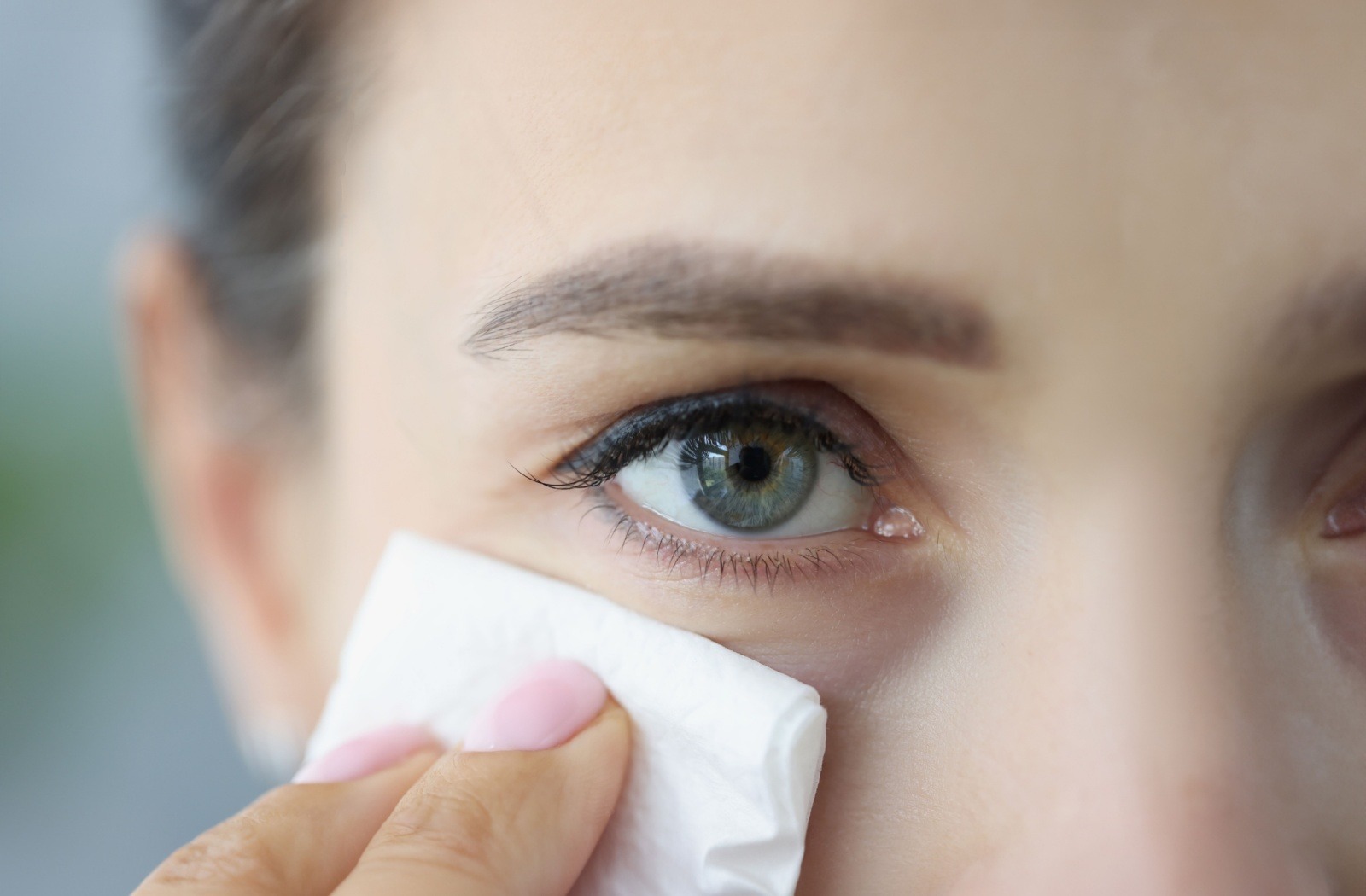
You might think watery eyes mean your eyes have too much moisture, but that’s not always true. Your eyes can actually water because they’re too dry—a frustrating cycle that leaves you reaching for tissues while dealing with burning, uncomfortable eyes.
Yes, dry eye can cause watering as your body’s reflex response to irritation and poor tear quality. When your tear film doesn’t work properly, your eyes trigger flood-like tearing that doesn’t actually solve the underlying dryness problem. Our team at Sage Eyecare can help diagnose and treat these complex dry eye conditions that often confuse people with their contradictory symptoms.
Why Do Dry Eyes Water?
Your eyes have a built-in alarm system that kicks in when something feels wrong. When your tear film breaks down or evaporates too quickly, your eyes send an emergency signal to produce more tears.
These reflex tears are like turning on a fire hose when you need a gentle sprinkler. They flood your eyes but don’t have the right balance of oils, water, and nutrients your eyes actually need. The poor-quality tear film continues to break down, your eyes stay irritated, and the watering cycle keeps going. Dry eye disease involves complex tear-film dysfunction that requires proper diagnosis to be treated effectively.
How Your Tear System Actually Works
Your tears aren’t just salty water—they’re a sophisticated 3-layer system that keeps your eyes comfortable and your vision clear. When this system works properly, you don’t even notice it.
- The oil layer prevents evaporation
- The water layer provides moisture and nutrients
- The mucus layer helps tears stick to your eye surface
When the Balance Gets Disrupted
If any layer is missing or doesn’t work properly, your entire tear film can become unstable. Your eyes might not produce enough tears, or the tears might evaporate too fast because there’s not enough oil to seal them in.
Either way, your eyes detect the problem and start producing emergency tears that don’t have the right composition to actually fix anything. The meibomian glands that line your eyelids play a role in producing the oil layer that keeps tears from evaporating too quickly.
Signs Your Watery Eyes Are Actually Dry Eye
True dry eye watering has specific patterns that help distinguish it from other causes of tearing. You’ll notice the watering gets worse in certain situations and comes with other uncomfortable symptoms:
- Eyes water more in windy or air-conditioned spaces
- Burning or stinging sensation along with tearing
- Blurry vision that clears when you blink
- Gritty feeling like something’s in your eye
- Tears don’t provide relief from discomfort
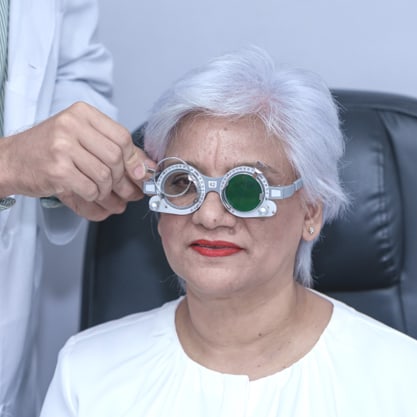
These symptoms might overlap with other conditions, so getting a proper, comprehensive eye exam helps determine if your watering is actually dry eye related.
What Can Worsen Dry Eye?
Certain environments and activities make dry eye worse by either drying out your eyes faster or interfering with normal tear production.
Environmental Factors
- Air conditioning and heating systems
- Wind and dry weather
- Screen time and reduced blinking
- Smoke and pollution
Lifestyle and Health Factors
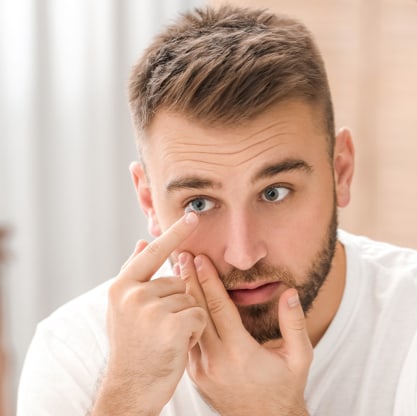
- Contact lens wear
- Certain medications
- Hormonal changes
- Age-related changes in tear production
Extended screen use can also significantly worsen symptoms by reducing your natural blink rate, which is why managing digital eye strain becomes important for dry eye relief.

How to Stop the Dry Eye Watering Cycle
Breaking the cycle requires treating the root cause of poor tear quality, not just managing the watering symptoms. Both professional treatments and at-home care can help restore your tear film balance.
Professional Treatment Options
Dry eye treatment often involves a combination of therapies designed to improve tear quality, reduce inflammation, and restore healthy oil flow in the eyelids. Depending on the cause of your symptoms, your eye care provider may recommend prescription eye drops to support tear production, in-office procedures that help unblock the oil glands in your eyelids, and a customized treatment plan tailored to your specific type of dry eye.
Professional in-office eyelid cleansing can help remove buildup that contributes to irritation. ZEST (Zocular Eyelid System Treatment) is a quick, 10-minute procedure that gently exfoliates the eyelids and cleans the lash margin using a soothing okra-based gel. This painless treatment removes biofilm, reduces inflammation, and helps restore healthy oil flow from clogged glands while treating conditions associated with dry eye, including blepharitis and Demodex mites.
Advanced technology can also treat the underlying causes of dry eye. Forma-I radiofrequency (RF) therapy from InMode uses gentle heat to melt thickened oils trapped in the Meibomian glands, improving tear quality and reducing evaporation. Treatments typically take 15–30 minutes, are comfortable, and can also provide mild skin-tightening benefits around the eyes.
Lumecca IPL (intense pulsed light) is another non-invasive option. This treatment reduces eyelid inflammation, targets bacteria and Demodex mites, and melts hardened oils within the glands to improve tear stability. Sessions take about 30 minutes, and many patients experience lasting relief after a series of two to four treatments.
At-Home Management
Managing dry eye at home often involves daily habits and supportive products that improve tear quality and maintain eyelid hygiene.
Specialized artificial tears can provide targeted relief depending on your symptoms. Many formulas contain ingredients such as sodium hyaluronate, ectoine, or trehalose to support tear stability and protect the eye’s surface. Options available at Sage Eyecare include I-Drop Pur, I-Drop Pur Gel, I-Drop MGD, Thealoz Duo, TheaHyabak, Hylo, Hylo Gel, and Hylo Dual.
Warm compress therapy helps soften and release thickened oils from the eyelid glands. Heated eye masks designed for dry eye treatment, such as the I-Relief Mask or Blepha EyeBag, can maintain consistent heat and often provide more effective results.
Eyelid hygiene products help remove debris and bacteria along the lash line. Lid wipes such as I-Lid ’N Lash wipes (with or without tea tree oil) or BlephaClean are commonly recommended.
Hypochlorous acid (HOCl) sprays can also support eyelid health. Products such as BIHOCL O.D., a 0.02% pure HOCl spray, help reduce bacteria and inflammation while improving symptoms of dry eye, blepharitis, and Meibomian Gland Dysfunction.
For sensitive eyelids or makeup removal, specialized preservative-free cleansers such as BlephaSol Duo micellar water and BlephaDerm eyelid contour cream help gently clean and protect the delicate eyelid area.
Omega-3 supplements formulated for eye health, such as PRN Omega-3 oils, may help support healthy tear production and reduce inflammation.
Healthy habits also play an important role. Staying hydrated, taking regular screen breaks, and using humidifiers in dry environments can all help reduce dry eye symptoms and improve comfort throughout the day.
At Sage Eyecare, a variety of dry eye treatments are available depending on your lifestyle and the severity of your symptoms. We offer both at-home management options and in-office treatments, including medicated eye drops, heated eye masks, and advanced therapies such as IPL and RF.
Find Relief Today
Our team at Sage Eyecare in Mississauga can provide comprehensive dry eye evaluations to determine the root cause of your watery eyes. Schedule an appointment for personalized treatment that addresses your tear film problems, rather than just managing the overflow.