
Key Takeaways
- Myopia often starts and shifts during the school years. The goal of myopia control is to slow how fast your child’s prescription changes.
- Regular glasses correct vision, but they don’t slow the shift.
- MiSight lenses are soft daily disposable contacts made for kids.
- MiYOSMART lenses look and feel like regular glasses lenses, but slow the progression of myopia.
- An eye exam helps match the right option to your child’s age, hobbies, and routine.
Two Paths to Slow a Prescription Change
Your child squints at the whiteboard. Six months later, their new glasses already feel weak, and you’re back for another children’s eye exam. That pattern is familiar to a lot of parents, and it’s the reason myopia control comes up so often at Sage Eyecare.
MiSight daily contact lenses and MiYOSMART glasses lenses both aim to slow how quickly your child’s nearsightedness changes. The right choice usually comes down to your child’s age, comfort level, and daily routine rather than one option suiting every family.
Why Myopia Control Matters for Your Child
Nearsightedness tends to show up during the school years, after which it tends to progress until adulthood.
Standard glasses and contact lenses sharpen your child’s vision. However, they don’t do anything to slow how fast that prescription shifts. That’s where myopia control lenses come in. The goal isn’t to fix myopia. It’s to slow the pace of change while your child’s eyes are still growing.
By reducing the rate at which myopia progresses, we can help your child reach adulthood with better vision than they’d otherwise have.
What to Know About MiSight Contact Lenses
How They Fit into Daily Life
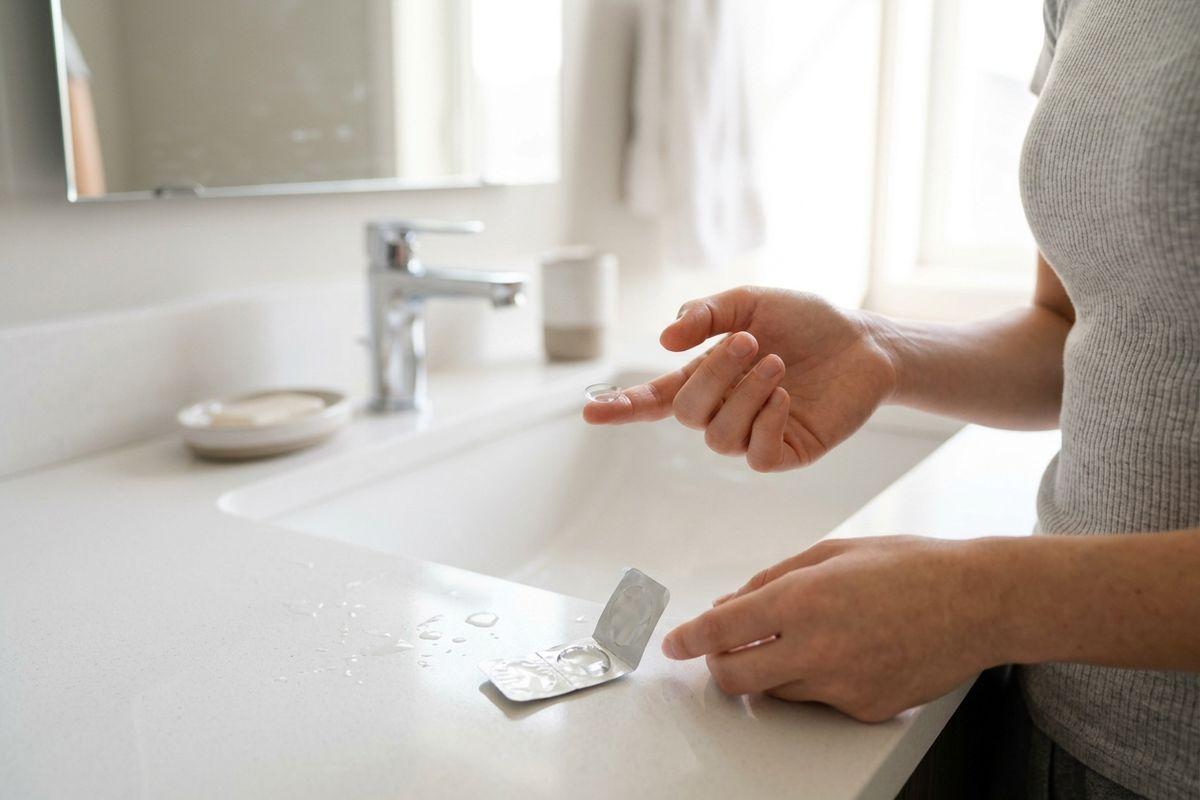
MiSight lenses are soft daily disposables designed for kids. Your child opens a fresh pair each morning and tosses them out at bedtime, so there’s no solution bottle and no case to keep track of. MiSight tends to be popular in families with busy sports schedules.
What Your Child Needs to Handle Them
Contacts ask for a bit of responsibility. Before your child starts with contacts, they should be able to:
- Touch their own eyes and wash their hands before touching their lenses.
- Follow a consistent wear schedule each week.
- Develop a firm habit of never wearing their lenses in pools, lakes, or the shower.
Plenty of kids can manage this by ages 8–9. Others need another year or two, and that’s fine.
What to Know About MiYOSMART Lenses
A Familiar Glasses Experience
MiYOSMART lenses fit into regular frames and look like any other pair of glasses. The centre of the lens corrects vision much like normal glasses. The outside of the lenses, however, is designed to focus light in a way that slows the rate at which myopia progresses.
Upkeep of myopia glasses is simple. You wipe them with a cloth at night, then put them in their case, and you’re done.
Who Tends to Do Well With Them
Younger kids who aren’t ready to handle contacts often start with glasses. So do kids who already like wearing glasses and don’t want to change much about their morning.
However, it’s important to remember that myopia control lenses work best with full-time wear, so they need to be on your child’s face all day at school, not just for reading.
MiSight vs MiYOSMART Side-by-Side Comparison
Daily Routine and Care
Glasses ask almost nothing from your child beyond putting them on. Contacts ask for clean hands and a couple of minutes at each end of the day, but there’s no cleaning or storing since each pair gets thrown out.
Cost, Sports, & Extra Visits
Here’s how the two compare on the practical side.
- Glasses lenses often cost less over the course of a year, since you’re buying lenses rather than a daily supply.
- Contacts include a fitting appointment plus check-in visits to see how your child is managing.
- Contacts stay out of the way during sports, with no frame to fog, slip, or get knocked off.
Some families end up using both, with glasses worn on school days and contacts used for weekend tournaments. It all depends on your child’s lifestyle and preferences.
How to Choose & Start a Myopia Plan in Mississauga
Questions Our Team May Ask
The conversation usually starts with your child’s age, maturity, hobbies, and how their time splits between screens and outdoor play. From there, your eye doctor looks at their current prescription and how quickly it’s progressing.
Your family’s routine counts too, along with what your child actually wants to wear. A lens your child likes is a lens your child keeps on.
Book a Children’s Eye Exam
Sage Eyecare has been caring for families since 1999, though we’ve since moved into a larger, modern practice.
Families looking for an eye doctor in Mississauga or an eye doctor in Etobicoke can have both lens options reviewed at one visit. While you’re here, take your time in our eyewear gallery, where our optical team can walk you through frames at every price range and explain exactly what your money is going toward.
Adults dealing with tired, gritty eyes can stop by too. Our clinic carries dry eye products including heated eye masks, lid wipes, hypochlorous acid sprays, and artificial tears, and you don’t need an appointment to pick them up. In-office options such as ZEST lid cleansing, Forma-I radiofrequency, and Lumecca IPL are available when your home care needs backup.
Book an appointment with our team at Sage Eyecare and start the conversation about your child’s changing prescription.